How to Move to Germany from India – 2026 Step‑by‑Step Guide
Moving from India to Germany starts with securing the correct long‑stay visa, then registering your address, obtaining health insurance, and activating your work permit. Use SettleBuddy’s Visa AI to match your profile, Career AI for job leads, and Housing AI to find a home, while the Language Lab helps you master German before arrival.
Quick answer
Moving from India to Germany starts with securing the correct long‑stay visa, then registering your address, obtaining health insurance, and activating your work permit. Use SettleBuddy’s Visa AI to match your profile, Career AI for job leads, and Housing AI to find a home, while the Language Lab helps you master German before arrival.
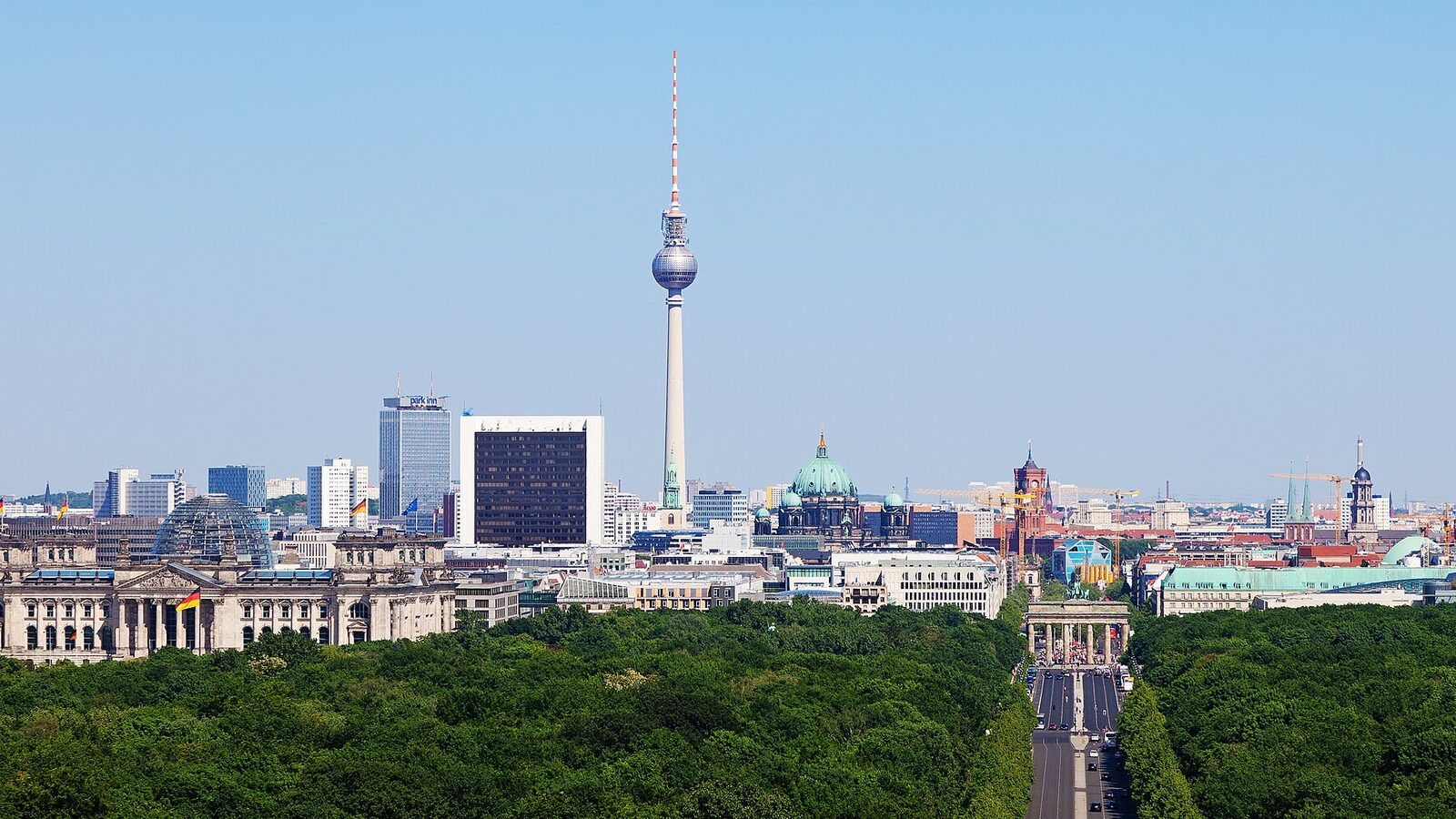
Why Move to Germany from India?
Germany consistently ranks among the world’s strongest economies, offering robust social security, high‑quality public services, and a vibrant cultural scene. For Indian professionals, the demand for skilled workers in engineering, IT, and healthcare creates clear pathways to long‑term residency and career advancement. Moreover, Germany’s central location in Europe opens travel opportunities across the continent, making it an attractive base for global explorers.
From an educational perspective, German universities provide tuition‑free or low‑cost programs, especially for STEM fields, which appeal to Indian students seeking world‑class research environments. The country’s commitment to integration, including language courses and community programs, helps newcomers adapt quickly. These factors combine to make Germany a compelling destination for both short‑term projects and permanent settlement.
However, the move requires careful planning due to strict immigration rules. Understanding the visa landscape, financial prerequisites, and bureaucratic steps is essential to avoid delays or rejections. This guide breaks down each phase, referencing official German sources, and shows how SettleBuddy’s AI suite can streamline the process for Indian applicants.
Fundamental Visa Entry Principle
According to the Federal Office for Migration and Refugees (BAMF), a visa is required as a matter of principle to enter Germany, and a residence title is applied for after arrival if the stay exceeds the visa’s validity period (source: BAMF). This two‑step approach means that even if you have a job offer, you must first obtain a long‑stay (type D) visa before crossing the border.
The Consular Services Portal, managed by the Federal Foreign Office, lists 28 different long‑stay visa purposes that can be applied for online (source: Consular Services Portal). Each purpose—such as work, study, or freelance activity—has its own documentation requirements, processing times, and eligibility thresholds. Selecting the correct purpose is the first decisive step toward a successful application.
For Indian nationals, the entry principle also implies that short‑stay Schengen visas (type C) are insufficient for stays longer than 90 days. Attempting to work or study on a short‑stay visa can lead to immediate removal and future bans. Therefore, align your intended length of stay with the appropriate long‑stay visa category from the outset.

Visa Options for Indian Nationals
Indian citizens have several long‑stay visa pathways, each tailored to specific professional or personal goals. The most common routes include the EU Blue Card for highly qualified employees, the Skilled Worker visa for those with recognized vocational training, the Job Seeker Visa for recent graduates, and the Freelance Residence Permit for liberal professions such as designers or consultants (source: BAMF).
The EU Blue Card requires a university degree and a job offer that meets a salary threshold defined as 55 % of the annual contribution assessment ceiling in the general pension insurance scheme; the exact euro amount is published on the BAMF website and changes annually (source: BAMF). The Skilled Worker visa for vocational training demands proof of a recognized German or equivalent qualification, which can be verified through the Recognition of foreign qualifications portal (source: Recognition of foreign qualifications).
Other options include the Opportunity Card (Chancenkarte), a points‑based system for job‑seekers, and the Post‑Study Residence Permit for graduates of a German university. Each category has distinct eligibility criteria, processing timelines, and permissible activities. Selecting the right category early prevents unnecessary paperwork and speeds up the overall relocation timeline.
| Visa Category | Primary Purpose | Key Requirement |
|---|---|---|
| EU Blue Card | Highly qualified employment | University degree + salary threshold (see BAMF) |
| Skilled Worker (Academic) | Professional job with degree | Recognized university degree |
| Skilled Worker (Vocational) | Job matching vocational training | Recognized vocational qualification |
| Job Seeker Visa | Search for employment after graduation | University degree, financial self‑sufficiency |
| Freelance Residence Permit | Liberal professions (e.g., designers) | Proof of freelance contracts & financial viability |
Step‑by‑Step Long‑Stay Visa Application
Begin by gathering all mandatory documents: a valid passport, completed visa application form from the Consular Services Portal, recent biometric photos, proof of health insurance, and the specific requirement for your chosen visa (e.g., job contract for the EU Blue Card). The Federal Foreign Office advises that all documents not originally in German or English be accompanied by a certified translation (source: Federal Foreign Office).
Next, schedule an appointment at the German Embassy or Consulate in India—typically in New Delhi, Mumbai, or Chennai. During the appointment, submit your dossier, pay the visa fee (the exact amount is listed on the official embassy page and may vary), and provide biometric data. The embassy will then forward your file to the BAMF for substantive review, a process that can take from four to twelve weeks depending on the visa type.
While awaiting a decision, use SettleBuddy’s Visa AI to monitor your application status and receive personalized reminders about any missing documents. The platform’s integration with the official German portal ensures you never overlook a required piece, reducing the risk of rejection due to incomplete paperwork.
Financial Proof & Documentation Checklist
Financial self‑sufficiency is a core requirement for most German long‑stay visas. For visa types that allow a blocked‑account approach, the exact amount to be deposited is published on the BAMF website and must be verified at the time of application (source: BAMF). If you are applying for a work‑related visa, a binding job contract with the stipulated salary is usually sufficient proof of livelihood.
In addition to the blocked‑account or employment contract, you must provide recent bank statements, a letter of financial support (if applicable), and proof of health insurance that meets German statutory standards. The Federal Foreign Office notes that health insurance must cover the entire period of stay and be accepted by German authorities (source: Federal Foreign Office).
SettleBuddy’s Career AI can help you locate employers willing to sponsor the required salary, while the Visa AI automatically formats your financial documents to match the official template required by the German authorities, ensuring consistency and compliance.
First‑Day Formalities: Registration and Health Insurance
Within two weeks of arriving in Germany, you must register your residence (Anmeldung) at the local Bürgeramt. Bring your passport, rental contract, and a completed registration form. The registration generates a Meldebescheinigung, which is essential for opening a bank account, obtaining a tax ID, and finalizing your residence permit. Failure to register on time can lead to fines and delay your work permit activation.
Simultaneously, you must enroll in a statutory health insurance scheme or present proof of a private plan that meets German standards. The Federal Foreign Office emphasizes that health insurance is mandatory for all residents, regardless of employment status (source: Federal Foreign Office). Your insurance provider will issue a health insurance card that you will use for medical appointments and pharmacy purchases.
SettleBuddy’s Housing AI can help you locate accommodation that meets the registration requirements (e.g., a lease with the landlord’s signature). Once you have the address, the platform can generate a pre‑filled registration form, saving you time and reducing the chance of errors during your first‑day paperwork.
Work Permits: From Skilled Worker to EU Blue Card
If you have secured a qualified job offer, the next step is to convert your long‑stay visa into a work permit. For university graduates, the EU Blue Card is the most advantageous route, granting you the right to work in a highly skilled position and eventually apply for permanent residency after 27 months — or 21 months with B1 German (§18c AufenthG, per BAMF). The exact salary threshold is listed on the BAMF site and must be met at the time of application (source: BAMF).
Skilled workers with vocational training follow a different path: after registering your recognized qualification via the Recognition of foreign qualifications portal, you can apply for a residence permit for skilled workers. This permit allows you to work in any job matching your qualification, and after 27 months (21 with B1 German) you may also be eligible for permanent residency per §18c AufenthG. The process requires proof of employment that corresponds to your training level.
SettleBuddy’s Career AI not only matches you with employers familiar with the German immigration system but also assists in drafting the necessary employment confirmation letters. By integrating these documents directly into the Visa AI workflow, you can submit a complete, compliant package to the German authorities.
Leverage SettleBuddy’s AI Suite for a Smooth Transition
SettleBuddy’s Visa AI acts as a virtual immigration consultant, guiding you through each step—from selecting the correct visa category to preparing the exact document set required by the BAMF. It cross‑references the latest official guidelines, ensuring you never rely on outdated thresholds or forms. The platform also sends automated alerts when your visa fee receipt is due or when the embassy schedules your appointment.
Career AI connects you with German employers who have previously hired Indian talent, offering insight into salary ranges, required German language levels, and typical onboarding timelines. By using the AI’s resume optimizer, you can tailor your CV to German standards, increasing the likelihood of receiving a job offer that satisfies the EU Blue Card or Skilled Worker salary criteria.
Finally, SettleBuddy’s Housing AI and Language Lab round out the relocation experience. The Housing AI searches for rental properties that meet registration requirements, while the Language Lab provides interactive lessons in German, focusing on everyday conversation and workplace terminology. Together, these tools reduce the friction of moving and help you settle faster.
Community, Ongoing Support, and Next Steps
Beyond the initial move, staying connected with a supportive community accelerates integration. SettleBuddy hosts a global mover network where newcomers share experiences, recommend local services, and arrange meet‑ups in German cities. Engaging with this community can provide practical tips on everything from navigating public transport to finding cultural events, complementing the official guidance from German authorities.
Remember that immigration law can evolve, and individual circumstances may require professional advice. The official BAMF hotline (+49 30 1815 1111) is available for general queries, but for complex cases—such as family reunification or dual‑nationality issues—consult a licensed immigration attorney. SettleBuddy’s platform can help you locate qualified professionals in Germany who speak English and Hindi.
Your next actionable steps are: (1) confirm the visa category that matches your profile using SettleBuddy’s Visa AI; (2) gather the required documents and schedule your embassy appointment; (3) secure health insurance and a rental contract through Housing AI; and (4) begin German language lessons with the Language Lab. Following this roadmap, you’ll be well‑positioned for a successful move in 2026.
Where SettleBuddy comes in
SettleBuddy is the AI relocation engine for your whole move — language, visas, housing and career in one place, launching for every country. Language Lab is live now; Housing AI, Visa AI and Career AI are on the way.
Explore SettleBuddy →Key takeaways
- A long‑stay (type D) visa is mandatory for any stay beyond 90 days; choose the correct category early.
- Financial proof—whether via a blocked account or a binding job contract—must meet the exact thresholds published by BAMF.
- Register your address (Anmeldung) and obtain health insurance within two weeks of arrival to avoid fines.
- Use SettleBuddy’s Visa AI, Career AI, Housing AI, and Language Lab to streamline paperwork, job hunting, housing, and language learning.
- Consult the official BAMF hotline or a licensed attorney for complex or personalized immigration questions.

FAQ
Do I need a German language test to apply for a work visa?
For most skilled‑worker visas, a basic German language proficiency (A1–A2) is recommended but not always mandatory if the job is in English. However, the EU Blue Card typically requires at least B1 level for long‑term integration. Always verify the exact language requirement on the BAMF website, and consider taking a recognized test to strengthen your application.
Can I bring my family with me on a freelance residence permit?
Yes, family reunification is possible, but each family member must apply for a separate residence permit and demonstrate sufficient financial resources and health insurance coverage. The German authorities assess the family’s overall livelihood, so you may need to show higher income or a larger blocked‑account amount. Consult the official BAMF guidelines for detailed family‑reunification criteria.
How long does the visa processing take after I submit my application?
Processing times vary by visa type and embassy workload, typically ranging from four to twelve weeks. The EU Blue Card and Skilled Worker visas often fall on the shorter end, while the Job Seeker Visa may take longer due to additional verification steps. SettleBuddy’s Visa AI tracks the status of your application and notifies you of any delays.
What if my Indian degree is not recognized in Germany?
You must have your qualification assessed through the Recognition of foreign qualifications portal (https://www.anerkennung-in-deutschland.de). If the assessment finds gaps, you may need to complete a supplementary course or obtain a German‑equivalent certification before you can qualify for a skilled‑worker visa. SettleBuddy’s Career AI can suggest accredited programs that bridge these gaps.
Is there a way to extend my stay beyond the initial visa period?
Yes, after the initial residence permit expires, you can apply for an extension or a different permit (e.g., from a Job Seeker Visa to an EU Blue Card) provided you meet the updated criteria, such as continued employment and sufficient income. Extensions must be filed before the current permit lapses, and the BAMF website provides the latest forms and deadlines.
Official sources
The regulated facts in this guide are drawn from official government sources. Rules and figures change — always confirm the current detail on the official page before you act.