UK Student Visa 2026: Requirements, Costs and Work Rules
A UK Student visa needs three things: a confirmed place from a licensed education provider, proof you can pay for the course and your living costs, and proof of your English. The amounts changed recently, and many guides still quote the old ones. Every figure below comes from GOV.UK or Home Office guidance, checked on 13 October 2026.
Quick answer
You can apply for a UK Student visa if you are 16 or over and have an unconditional offer from a licensed student sponsor, shown by a Confirmation of Acceptance for Studies (CAS). The application fee is £558, plus the healthcare surcharge of £776 a year. You must show your course fees for one academic year and living costs of £1,529 a month in London or £1,171 a month outside London, for up to 9 months, held for 28 days in a row. Degree-level students need English at level B2. From outside the UK you can apply up to 6 months before the course starts, and a decision usually takes 3 weeks. Degree-level students can work up to 20 hours a week during term time.
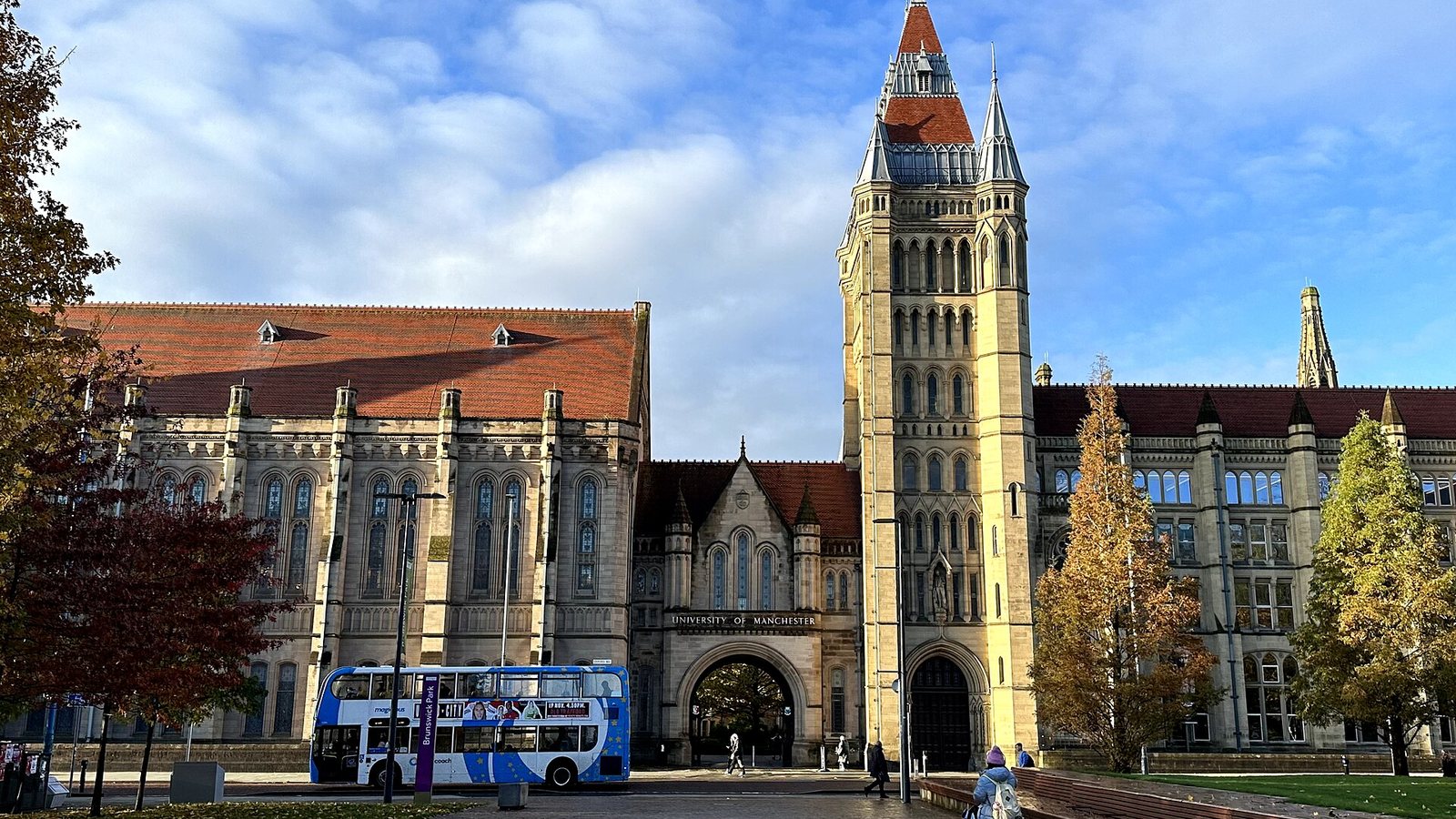
UK Student visa at a glance
| Item | Rule in 2026 |
|---|---|
| Minimum age | 16 (parental consent needed at 16 or 17) |
| Offer needed | An unconditional offer from a licensed student sponsor, confirmed by a CAS reference number |
| Application fee | £558, from inside or outside the UK |
| Healthcare surcharge | £776 a year for students and their dependants |
| Living costs to show | £1,529 a month in London; £1,171 a month outside London; for up to 9 months |
| English level | B2 for degree level or above; B1 below degree level |
| Earliest application | 6 months before the course starts from outside the UK; 3 months from inside |
| Decision time | Usually 3 weeks from outside the UK; 8 weeks from inside |
| Length of stay | Usually up to 5 years at degree level; up to 2 years below degree level |
| Work in term time | Up to 20 hours a week at degree level; up to 10 hours a week below degree level |
Sources: GOV.UK Student visa guide and the Home Office Student route caseworker guidance, checked on 13 October 2026.
Who can apply
According to GOV.UK, you can apply for a Student visa if you are 16 or over and you:
- have been offered a place on a course by a licensed student sponsor;
- have enough money to support yourself and pay for your course;
- can speak, read, write and understand English;
- have consent from your parents if you are 16 or 17.
The Student visa replaced the Tier 4 (General) student visa. If you are 16 or 17 you may be eligible for a Child Student visa instead.
Courses that qualify
Your course must be one of the following: a full-time course at degree level or above (RQF level 6, 7 or 8); a full-time course below degree level (RQF level 3, 4 or 5) with at least 15 hours a week of organised daytime study; a part-time course above degree level (RQF level 7 or above); or an English language course at level B2 or above. If you will study or research a sensitive subject at RQF level 7 or above, you may also need an Academic Technology Approval Scheme (ATAS) certificate.
The CAS
Once your education provider has made you an unconditional offer, it sends you a reference number called a Confirmation of Acceptance for Studies. You enter it on the visa application. You must apply for your visa within 6 months of receiving your CAS, and the CAS also states the course fee you need to show.
How much money you must show
The financial requirement has two parts, and you need both unless an exemption applies.
- Course fees. Enough to pay for one academic year, which is up to 9 months. The amount is on your CAS.
- Living costs. £1,529 a month for courses in London, or £1,171 a month for courses outside London, for up to 9 months. London means the City of London and the 32 London boroughs.
The money must be in your account for at least 28 days in a row, and the last day of that period must be within 31 days of the date you apply. GOV.UK's example: if you submit your application on 1 January, the funds must have been in your account for at least the 28 days ending on 1 December. If you have a student loan or a financial sponsor, you provide evidence from the lender or sponsor instead.
Who does not have to show the money
- You have lived in the UK with a valid visa for at least 12 months before you apply.
- You are applying as a student union sabbatical officer.
- You are from a country on the "differential evidence requirement" list. This covers British nationals (overseas) and nationals of the countries and territories on GOV.UK's list, among them Australia, Brazil, Canada, China, Japan, Malaysia, Mexico, Singapore, South Korea, Thailand, the United Arab Emirates, the United States and the EU member states. India, Nigeria and Pakistan are not on the list. You do not submit the evidence up front, but UK Visas and Immigration can still ask for it before deciding.
The English requirement
You usually prove your English when you apply. The level depends on the course: equivalent to CEFR level B2 for study at degree level or above, and CEFR level B1 for study below degree level. You can prove it with a UK school qualification such as a GCSE or A level, a degree taught in English, or a Secure English Language Test from an approved provider. If you study at degree level with a Higher Education Provider, the provider can assess your English itself, to the same B2 standard.
You do not need to prove your English if you are a national of Canada, or from one of the countries on GOV.UK's exemption list, such as Australia, Ireland, Jamaica, New Zealand or the USA, or if you completed a degree-equivalent qualification in one of them.
What a UK Student visa costs
| Cost | Amount |
|---|---|
| Application fee | £558 |
| Healthcare surcharge | £776 for each year of the visa |
| Living costs to show, London | £1,529 a month, up to 9 months |
| Living costs to show, outside London | £1,171 a month, up to 9 months |
| Each dependant, London | £845 a month, up to 9 months |
| Each dependant, outside London | £680 a month, up to 9 months |
The healthcare surcharge is charged for the whole length of the visa, and GOV.UK notes that a visa may last longer than the course itself. A 2-year visa costs £1,552 in surcharge. Each family member who joins you pays the visa fee and the surcharge too.
How to apply, step by step
- Get an unconditional offer from a licensed student sponsor and wait for your CAS.
- Put the money in place. Start the 28-day period early enough that it ends within 31 days of your application.
- Gather your documents. A current passport and your CAS, plus, where they apply, proof of funds, an ATAS certificate, tuberculosis test results, and parental consent and proof of relationship if you are under 18.
- Apply online. From outside the UK the earliest date is 6 months before your course starts.
- Prove your identity with the UK Immigration: ID Check app, or by giving fingerprints and a photo at a visa application centre.
- Wait for the decision, usually within 3 weeks. If you succeed you get an eVisa, a digital record of your status that you access through a UK Visas and Immigration account.
You can arrive up to 1 week before a course that lasts 6 months or less, or up to 1 month before a longer course. You must not travel before the start date on your visa.
Working on a Student visa
Home Office guidance sets the work limits by course level. On a full-time course at degree level or above you may work part-time during term time, up to a maximum of 20 hours a week, and full-time during vacations. On a full-time course below degree level the term-time limit is 10 hours a week. Voluntary work counts towards the same weekly limit.
On a Student visa you cannot be self-employed, work as a professional sportsperson or sports coach, or claim public funds.
Bringing your partner and children
Only some students can bring dependants. You must be either a government-sponsored student on a course longer than 6 months, or a full-time student on a postgraduate course (RQF level 7 or above) that lasts 9 months or longer. If your postgraduate course started on or after 1 January 2024, it must be a PhD or other doctorate, or a research-based higher degree. A taught master's course that began on or after that date does not qualify, unless you are government-sponsored.
Each dependant needs £845 a month for courses in London or £680 a month outside London, for up to 9 months, on top of your own funds. See our comparison of family rules for students across Europe.
After your course: the Graduate visa
When you have successfully completed an eligible course, you can switch to a Graduate visa from inside the UK. It lasts 2 years if you apply on or before 31 December 2026 and 18 months if you apply on or after 1 January 2027. With a PhD or other doctorate it lasts 3 years. It costs £937 and cannot be extended. Our UK Graduate visa guide has the details.
Mistakes that cause refusals
- Funds held for fewer than 28 days, or a 28-day period that ended more than 31 days before the application.
- Using the old living-cost amounts. The current rates are £1,529 a month in London and £1,171 a month elsewhere.
- Applying more than 6 months after the CAS was issued.
- Assuming family can come. Most taught master's students can no longer bring dependants.
Frequently asked questions
How much money do I need for a UK Student visa in 2026?
You need your course fees for one academic year, as stated on your CAS, plus living costs of £1,529 a month for courses in London or £1,171 a month outside London, for up to 9 months. The money must be held for at least 28 days in a row. You also pay the £558 application fee and the healthcare surcharge of £776 a year.
How long does a UK Student visa take?
You usually get a decision within 3 weeks if you apply from outside the UK and within 8 weeks if you apply from inside. From outside the UK you can apply up to 6 months before your course starts.
How many hours can I work on a UK Student visa?
If you study full-time at degree level or above, up to 20 hours a week during term time and full-time during vacations. If your course is below degree level, up to 10 hours a week during term time. You cannot be self-employed.
What English level do I need for a UK Student visa?
Level B2 on the CEFR scale for courses at degree level or above, and level B1 for courses below degree level. Nationals of some countries, including Canada, Australia, Ireland, New Zealand and the USA, do not have to prove their English.
Can I bring my family on a UK Student visa?
Only if you are a government-sponsored student on a course longer than 6 months, or a full-time postgraduate student on a course of 9 months or more. For postgraduate courses that started on or after 1 January 2024, the course must be a PhD, another doctorate or a research-based higher degree.
Can I stay in the UK after I graduate?
Yes, by switching to a Graduate visa. It lasts 2 years if you apply on or before 31 December 2026, 18 months if you apply on or after 1 January 2027, and 3 years if you completed a PhD or other doctorate.
How long can I stay on a UK Student visa?
It depends on your course. If you are 18 or over and the course is at degree level, you can usually stay for up to 5 years. Below degree level, usually up to 2 years.
Sources (official only)
- GOV.UK — Student visa
- Home Office — Student route caseworker guidance (work conditions)
- GOV.UK — Healthcare surcharge: how much you have to pay
- GOV.UK — Graduate visa
- GOV.UK — eVisas
All figures verified against the official pages above on 13 October 2026. Rates change, so check GOV.UK before you move money or apply. Information, not legal advice.