Cost of Living in Singapore 2026: Rent, Pay and Prices
Singapore's public agencies publish the numbers you need to budget a move: what tenants pay for HDB flats in each town, what residents earn, how fast prices are rising, and the regulated prices of electricity, water and public transport. This guide puts them side by side. Every figure comes from a Singapore government source or regulated utility read on 13 October 2026, and amounts are in Singapore dollars.
Quick answer
The median monthly rent for a 4-room HDB flat in the second quarter of 2026 ran from S$3,000 in Bukit Panjang and Choa Chu Kang to S$4,600 in the Central area. The median gross monthly income of full-time employed residents was $5,775 in 2025, including employer CPF contributions. Consumer prices in August 2026 were 2.3% higher than a year earlier. Electricity costs 31.16 cents/kWh from 1 October to 31 December 2026, an adult monthly public transport pass costs $122.00, and GST is 9%.
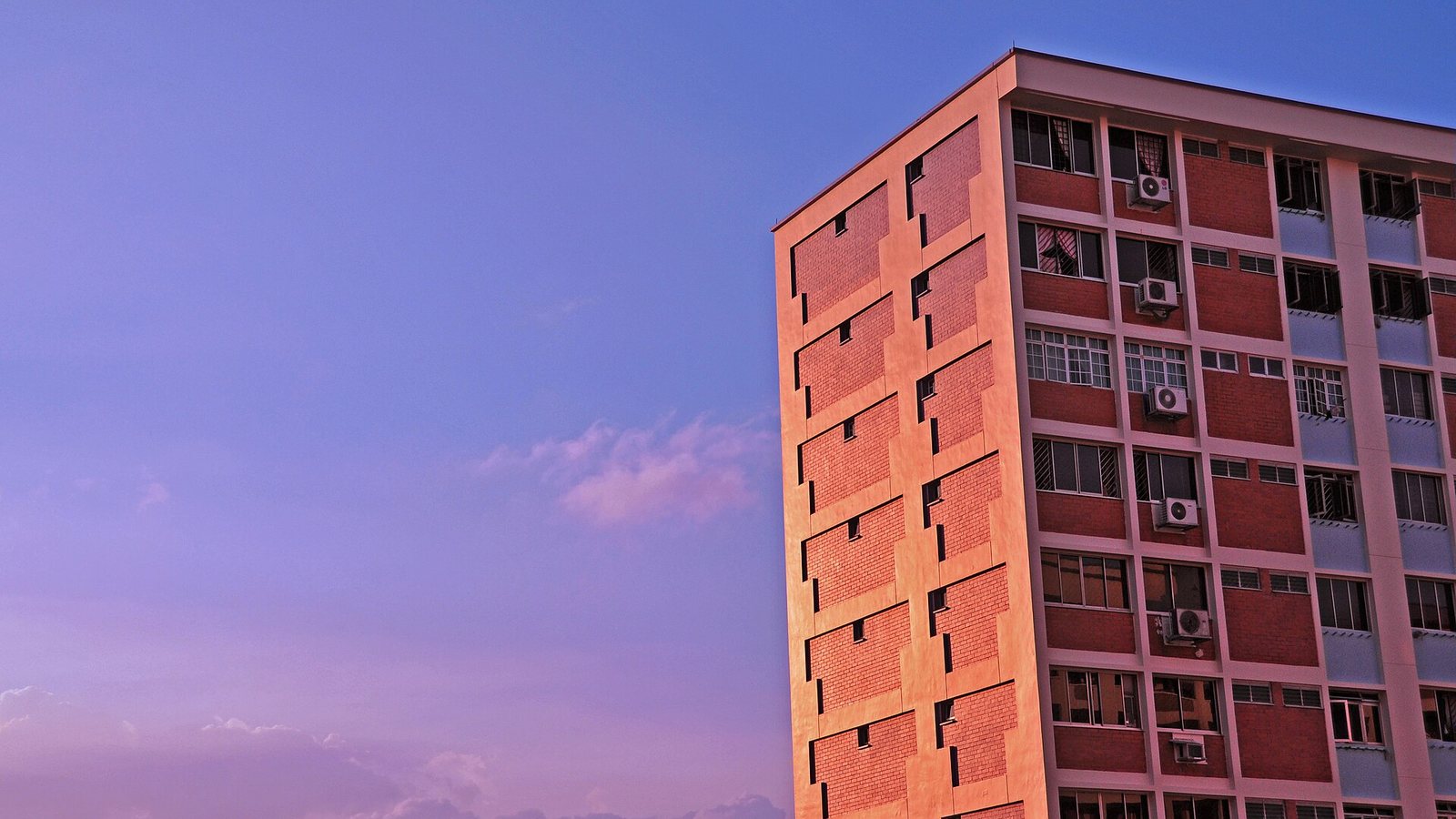
Rent: HDB flats by town
The Housing & Development Board (HDB) publishes the median monthly rent of HDB flats with rental approvals, by town and flat type. The table shows the second quarter of 2026, from the open dataset on data.gov.sg. A dash means no figure is published for that combination.
| Town | 3-room | 4-room | 5-room |
|---|---|---|---|
| Ang Mo Kio | S$2,800 | S$3,500 | S$3,880 |
| Bedok | S$2,800 | S$3,400 | S$3,650 |
| Bishan | S$3,000 | S$3,650 | S$4,000 |
| Bukit Batok | S$2,700 | S$3,300 | S$3,600 |
| Bukit Merah | S$3,000 | S$4,000 | S$4,300 |
| Bukit Panjang | S$2,600 | S$3,000 | S$3,300 |
| Central | S$3,300 | S$4,600 | S$5,100 |
| Choa Chu Kang | S$2,500 | S$3,000 | S$3,200 |
| Clementi | S$3,000 | S$3,900 | S$4,350 |
| Geylang | S$2,800 | S$3,800 | S$4,000 |
| Hougang | S$2,800 | S$3,200 | S$3,450 |
| Jurong East | S$2,800 | S$3,400 | S$3,800 |
| Jurong West | S$2,700 | S$3,500 | S$3,700 |
| Kallang/Whampoa | S$3,000 | S$3,800 | S$4,100 |
| Marine Parade | S$3,000 | S$3,350 | - |
| Pasir Ris | - | S$3,350 | S$3,600 |
| Punggol | S$2,850 | S$3,300 | S$3,300 |
| Queenstown | S$3,100 | S$4,130 | S$4,400 |
| Sembawang | - | S$3,180 | S$3,300 |
| Sengkang | S$2,900 | S$3,200 | S$3,300 |
| Serangoon | S$2,800 | S$3,400 | S$3,800 |
| Tampines | S$2,800 | S$3,500 | S$3,650 |
| Toa Payoh | S$2,900 | S$3,800 | S$4,030 |
| Woodlands | S$2,600 | S$3,100 | S$3,300 |
| Yishun | S$2,700 | S$3,100 | S$3,500 |
Three things to read from the table:
- The range by town. A 4-room flat has a median rent of S$3,000 in Bukit Panjang and Choa Chu Kang, and S$4,600 in Central.
- Town can outweigh size. In Choa Chu Kang the median runs from S$2,500 for a 3-room flat to S$3,200 for a 5-room flat. A 3-room flat in Central has a median of S$3,300.
- These are medians. Individual flats rent above and below them, and the dataset does not cover private condominiums.
What people earn
The Ministry of Manpower (MOM) publishes the median gross monthly income from employment of full-time employed residents, including employer CPF contributions. Residents here means Singapore citizens and permanent residents.
| Mid-year | Median gross monthly income |
|---|---|
| 2020 | $4,534 |
| 2023 | $5,197 |
| 2024 | $5,500 |
| 2025 | $5,775 |
The figure is gross: it is measured before employee CPF contributions and personal income tax. It covers basic wages, overtime pay, commissions, tips and other allowances.
The salary floors for foreign hires
If you are moving on a work pass, MOM's qualifying salaries set the minimum you must earn to get the pass. An Employment Pass needs a fixed monthly salary of at least $5,600, rising with age to $10,700 at 45 and above. An S Pass needs at least $3,300. Both floors rise for new applications from 1 January 2027, to $6,000 and $3,600. To bring a spouse or children on a Dependant's Pass you need a fixed monthly salary of at least $6,000.
Prices in 2026
The Department of Statistics (SingStat) published the August 2026 Consumer Price Index on 23 September 2026.
| Consumer Price Index, August 2026 | Change |
|---|---|
| All items, from a year earlier | 2.3% |
| All items, from the previous month | 0.6% |
| Airfares, from a year earlier | 12.9% |
| Point-to-point transport services | 12.3% |
| Clothing and footwear | 3.1% |
| Personal care products | 2.7% |
| Food | 2.3% |
All-items inflation edged up from 2.2% in July 2026.
Electricity, gas and water
Electricity tariffs are regulated by the Energy Market Authority and revised quarterly. SP Group publishes the tariffs for the quarter from 1 October to 31 December 2026:
| Utility | With GST | Without GST |
|---|---|---|
| Electricity | 31.16 cents/kWh | 28.59 cents/kWh |
| Gas | 23.38 cents/kWh | 21.45 cents/kWh |
| Water, per cubic metre | $1.56 or $1.97 | $1.43 or $1.81 |
The two water prices apply below and above 40 cubic metres of consumption. Of the electricity tariff before GST, energy costs make up 22.18 cents and network costs 6.10 cents per kWh.
Public transport
Bus and rail fares are based on distance travelled, and the Public Transport Council publishes the fare tables. On adult bus fares, the card fare is lower than the cash fare in every distance band.
| Adult fare, basic bus and train | Card | Cash, bus |
|---|---|---|
| Up to 3.2 km | $1.28 | $2.10 |
| 9.3 km to 10.2 km | $1.86 | $2.70 |
| 19.3 km to 20.2 km | $2.27 | $3.10 |
| Over 40.2 km | $2.57 | $3.20 |
| Monthly pass, unlimited basic bus and train rides | Price |
|---|---|
| Adults (Monthly Travel Pass) | $122.00 |
| University students | $81.00 |
| Polytechnic students | $49.00 |
| Secondary school students | $49.00 |
| Primary school students | $39.00 |
| Senior citizens | $55.00 |
Card fares for express bus services are a fixed $1 higher than basic bus fares for adults.
Tax on what you earn and spend
- GST: the Goods and Services Tax rate is 9%.
- Income tax for residents: rates are progressive. The first $20,000 of chargeable income is taxed at 0%, the next $10,000 at 2%, the next $10,000 at 3.5% and the next $40,000 at 7%. The top rate is 24%, on income in excess of $1,000,000.
- What that adds up to: the Inland Revenue Authority of Singapore (IRAS) table gives gross tax payable of $3,350 on the first $80,000 of chargeable income and $7,950 on the first $120,000.
- Non-residents: employment income is taxed at a flat 15% or at the resident rates, whichever gives the higher tax amount.
- CPF: employers pay Central Provident Fund contributions for Singapore Citizens and Permanent Residents. The CPF Board lists foreigners as exempt.
How to use these numbers
- Pick the town and flat type and take the median rent from the HDB table.
- Set it against your gross salary. Compare your offer with the $5,775 median and with the salary floor for your pass.
- Add utilities at the regulated tariffs for the current quarter.
- Add transport. The $122.00 adult monthly pass gives a ceiling for basic bus and train travel.
- Estimate income tax from the IRAS table once you know whether you will be a tax resident.
What this page does not cover
The figures above are the ones we could read in official sources on the day of checking. They do not include private condominium rents, school fees or healthcare costs, so add those from the provider's own price list if they apply to you.
Frequently asked questions
How much is rent in Singapore in 2026?
For HDB flats in the second quarter of 2026, the median monthly rent of a 4-room flat ran from S$3,000 in Bukit Panjang and Choa Chu Kang to S$4,600 in Central. A 3-room flat ran from S$2,500 in Choa Chu Kang to S$3,300 in Central.
What is the median salary in Singapore?
The median gross monthly income from employment of full-time employed residents was $5,775 in 2025, including employer CPF contributions, according to MOM.
What is the inflation rate in Singapore?
The Consumer Price Index rose 2.3% in the year to August 2026 and 0.6% from the previous month.
How much is electricity in Singapore?
The regulated tariff is 31.16 cents/kWh with GST from 1 October to 31 December 2026, or 28.59 cents/kWh without GST.
How much does public transport cost in Singapore?
Adult card fares on basic bus and train services run from $1.28 for up to 3.2 km to $2.57 for over 40.2 km. An adult Monthly Travel Pass with unlimited basic bus and train rides costs $122.00.
What is the GST rate in Singapore?
9%.
Do foreigners pay CPF in Singapore?
CPF contributions are payable for employees who are Singapore Citizens or Singapore Permanent Residents. The CPF Board lists foreigners as exempt.
Official sources
- Housing & Development Board, via data.gov.sg — Median rent by town and flat type (2026-Q2)
- Ministry of Manpower — Summary table: Income (released 31 August 2026)
- Department of Statistics — Singapore Consumer Price Index, August 2026 (23 September 2026)
- SP Group — Tariff information (1 October to 31 December 2026)
- Public Transport Council — Public transport fares and passes
- IRAS — Current GST rates
- IRAS — Individual income tax rates
- CPF Board — Who should receive CPF contributions
- MOM — Eligibility for Employment Pass
- MOM — Eligibility for S Pass
- MOM — Eligibility for Dependant's Pass
All figures verified against the official pages above on 13 October 2026. Rents are medians, so individual flats cost more or less. Tariffs are revised quarterly and fares are reviewed by the Public Transport Council. Information, not financial or tax advice.